

What to do in Milan: our themed holidays
by
Published on 7/10/25, modified on 11/19/26

Want to discover the city of design and fashion, where every street exudes elegance? Milan is easily accessible by train from France and other major European cities! Here's our guide to a city-trip between culture and gastronomy, without planes or cars.
Milan is easily accessible by train, with 3 main stations (Milano Centrale, Milano Porta Garibaldi and Milano Cadorna) served by TGV, Frecciarossa and regional trains.
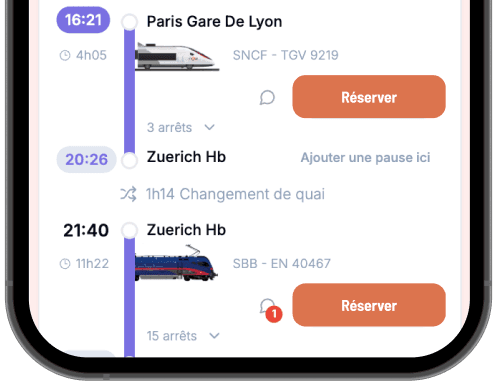
From Paris the Frecciarossa direct puts about 7h (departure Paris Gare de Lyon, arrival Milano Centrale).
From Lyon the journey takes approx. 11h by train (with correspondence).
Milan can also be reached from Turin, Geneva or even Barcelona.
PMR access: Milan wins the Access City Award 2016 for its accessibility policy! Good to know: the ATM metro (lines M1-M5) has elevators and stairlifts, but only lines M1 and M5 are wheelchair accessible.
In Milan, there is no shortage of possibilities: the Duomo with its Gothic spires and panoramic view from the terrace, the Galleria Vittorio Emanuele II the Brera district with its art galleries and typical cafés, the Navigli and their canals... The atmosphere combines historic grandeur and creative energy, and all is easily discovered on foot or by public transport. All the ingredients for a weekend full of discoveries!

Article
What to do in Milan: our themed holidays
You can also explore other cities in Italy: