
Alpe d'Huez by Train: How to Get There and Enjoy the Resort Without a Car
by
Published on 4/16/26, modified on 5/19/26

Inspiration and great deals for your next low-carbon trips



Micro-adventures are all the rage. And honestly, it’s easy to see why: sometimes all it takes is a few days to feel like you’ve gotten far away. A night train, a few connections, a backpack… And just like that, you’re already at the start of a trail in the Alps or on a Scottish island.
Okay, that’s all well and good, but planning a hike in Europe without flying is often a real headache when you don’t know where to start. Which trains should you take? Where should you start the route? How do you get to the trailhead without a car? How can you be sure the route is reliable, and above all, which hikes are really worth the trip?
To help you get ready for your next adventure, we’ve selected some options for you 5 hikes accessible by train from the Recto Verso Europe Box Set. If you’re not familiar with it, Recto Verso is an independent media outlet that offers car-free walking and cycling routes (with tried-and-tested routes throughout France and Europe). The Swiss Alps, the Amalfi Coast, the wild Balkans, Swedish fjords, or the Scottish Hebrides: there’s something for every skill level and every desire to get away.
To help you choose the route that’s best for you, we’ve put together a summary table with the key practical details: difficulty level, atmosphere, hike duration, and train travel time from France.
Five itineraries that prove you don’t have to fly to experience a great adventure. Whether accessible, contemplative, coastal, or alpine, each hike offers a different way to discover Europe at the pace of the train and on foot.
| Destination | Atmosphere | Level | Duration | Train ride |
|---|---|---|---|---|
| Switzerland | High Mountains & Mountain Huts | Intermediate | 4 days | ~5 hours and 45 minutes from Paris |
| Italy | Mediterranean Coast & Cliffside Villages | Intermediate | 6 days | ~2:00 p.m. |
| Scotland | Islands & Seascapes | Difficult | 11 days | ~6:00 p.m. |
| Sweden | Sea, Forests & Archipelago | Accessible | 6 days | ~7 p.m. |
| Albania | Wild Trek Through the Balkans | Intermediate | 10 days | ~33 hours |
What about the preparations? If you're not sure what to pack in your backpack, check out these Recto Verso practical guides, or check out the booklets included in the Recto Verso sets (which are full of tips and tricks)!
If you had to pick the perfect hike to experience backpacking in the mountains without traveling to the other side of the world, this one would definitely be at the top of the list. Over four days, this route connects Crans-Montana to Lenk through the Swiss Alps, amid high-altitude lakes, Alpine passes, and mountain huts perched above glaciers.

Pas de Maimbré Alpine Trail, in Anzère
Best time to visit: June through October

© Design: Recto Verso
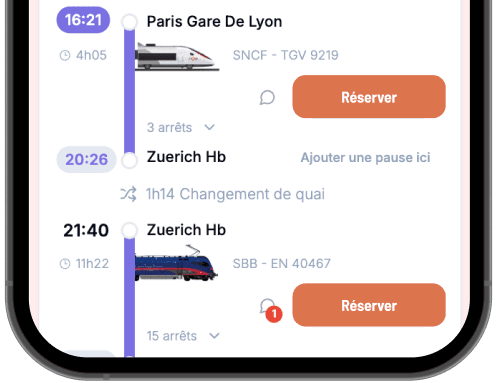
From France, the easiest way to get to Crans-Montana by train is to first travel to Sierre/Siders (the station serving the resort), then complete the journey by funicular or bus. From Paris, you can easily reach Switzerland via the TGV Lyria, then continue on the Swiss rail network. The total travel time varies depending on connections, but it takes about 5.5 hours from Paris to Sierre, followed by a 15-minute funicular ride to Crans-Montana.
Recommended itinerary: France → major Swiss city → Sierre/Siders → Crans-Montana.
Final section: Funicular from Sierre (about 13 minutes), or regional bus if necessary.
What we particularly love here is the balance between accessibility and immersion. You don’t have to be a mountaineer to experience a true high-mountain adventure: the mountain huts let you travel light, and the route remains suitable for hikers who are already somewhat accustomed to walking, and the Swiss scenery does the rest. The bonus? The train ride is part of the journey itself, especially thanks to the legendary Lucerne-Interlaken Express, which winds its way through valleys and past turquoise lakes!

Article
Switzerland by panorama train: the ultimate tour of Switzerland's most beautiful landscapes
For more information, you can find the complete itinerary on the Recto Verso website.
Here, you have to work a little harder for la dolce vita than elsewhere. Over the course of six days, this hike along the Amalfi Coast on the legendary “Path of the Gods”, amidst hilltop villages, turquoise coves, and mountains plunging into the Mediterranean.

The magic of the “Path of the Gods,” with views of Positano and the Amalfi Coast
The scenery seems almost unreal: lemon and olive trees, colorful houses clinging to the cliff, small shaded terraces, and spectacular views of the Tyrrhenian Sea. But beware: behind the postcard-perfect scenery lies a real hike, with nearly 5,000 meters of elevation gain cumulative.
What we love about this itinerary is precisely that constant contrast between physical exertion and the good life. Here, days often start with a long climb up stone steps… and end with an aperitivo as the sun sets. Honestly, it’s hard to beat this for a “Mediterranean adventure.”

© Design: Recto Verso - Contributor: Marion Haacke
From France, the easiest way to reach the Amalfi Coast without flying is to travel through northern Italy and then take the train down to Salerno. The journey itself offers a chance to enjoy a a beautiful train trip through the Alps and then the Italian countryside, before reaching the Mediterranean landscapes in the southern part of the country.
Recommended itinerary: - From Paris: Paris → Turin → Salerno → Raito. - From Lyon: Lyon → Chambéry → Turin → Salerno → Raito.
Final section: From the Salerno train station, local buses take about 30 minutes to reach Raito.
From Paris It takes about 7 hours by train to Turin, followed by another 6 hours or so to reach Salerno on the Italian high-speed train. You can also take a night train from Turin to Salerno to save a night’s stay there.
From Lyon, you first need to travel to Chambéry (about 1 hour), then to Turin via the Alps (about 4.5 hours), before continuing on to Salerno.
This hike offers something completely different from the rest of this selection: a Mediterranean adventure where the mountains meet the sea. You’ll alternate between hilltop villages, scenic trails, and swimming in the turquoise waters of the Amalfi Coast.
And above all, unlike many Alpine routes, this adventure is ideal (and even highly recommended) off-season. In the spring or fall, the temperatures are ideal for walking, and the region regains some of its tranquility away from the summer crowds (best avoided in July and August).
A nice little bonus: here, it’s easy to stock up on supplies thanks to the many villages along the way. And honestly, ending a day of hiking with a plate of pasta or a glass of limoncello while looking out over the Mediterranean is a pretty compelling reason to come.
For more information, you can find the complete itinerary in the Recto Verso Europe Box Set !
Welcome to the Hebrides, that windswept Scottish archipelago where white sandy beaches meet sheer cliffs and endless moors.
Over the course of eleven days, this hike takes you across several islands from south to north, in a totally addictive “end-of-the-world” atmosphere. Here, ferries are an integral part of the journey, as are the little British trains that take you to the Highlands and the Scottish west coast.
The scenery is constantly changing: almost tropical beaches, lush green hills, rocky coves, secluded villages… All bathed in that distinctive Scottish light.

© Design: Recto Verso - Contributor: Geoffroy de Streel
From France, the easiest way to reach the island of Vatersay in Scotland without flying is to combine train, bus, and ferry throughout England and Scotland The route first passes through London and then Glasgow, before continuing by bus to the Outer Hebrides. The journey ends with a ferry ride to the island of Barra, followed by a short crossing to Vatersay, which is connected to Barra by a causeway. Admittedly, there are several connections. But it’s a wonderful train adventure that takes you across Great Britain from south to north before reaching one of the wildest little islands in the Hebrides! And you can certainly take advantage of this to plan a Train tour of Scotland.
Recommended routes:- From Paris (daytime train option): Paris → London → Glasgow → Uig (Skye) → ferry to Castlebay (Barra) → Vatersay.- From Paris (overnight train option): Paris → Glasgow (on a night train) → Uig (Skye) → ferry to Castlebay (Barra) → Vatersay.
Final section: From Castlebay on the island of Barra, a short ferry ride connects Barra to Vatersay in just a few minutes.
From Paris, you can reach London in about 2.5 hours by Eurostar, then continue on to Glasgow by train in about 4.5 to 5 hours. From Glasgow, it takes about 5.5 to 6 hours by bus to Uig on the Isle of Skye, followed by a ferry to Castlebay (Barra) that takes about 1 to 1.5 hours. Once in Barra, Vatersay is just a few minutes’ drive from Castlebay.
Another option: from Paris, you can take the Caledonian Sleeper overnight train to Glasgow, which saves you a night’s stay at a hotel and takes you straight to Scotland. The rest of the journey (bus → ferry → crossing to Vatersay) remains the same.
From Lyon, as with other major cities in France, you first need to travel to Paris by TGV (about 2 hours from Lyon), then continue on to London and Glasgow as described above. Alternatively, you can travel to Scotland via Manchester or Birmingham, depending on the available connections and your preferences.
For more information, you can find the complete itinerary in the Recto Verso Europe box set!

Article
The Caledonian Sleeper: travel to Scotland by night train from London

Article
Discover Scotland by train: the ultimate guide (7, 10 and 15-day tours)
What if hiking in Europe didn't necessarily mean steep climbs and Alpine peaks? Head to Sweden for an adventure much more contemplative, nestled between the Baltic Sea, pine forests, and wild coves.
This route follows the Sörmlandsleden trail, south of Stockholm, in an incredibly peaceful Nordic setting. Here, the landscape alternates between rocky cliffs, secluded beaches, nature reserves, and small, remote villages along the water. A perfect hike for those who want to slow down, breathe deeply, and enjoy the fresh air without pushing yourself too hard.
It's also probably the the most accessible hike in this selection : minimal elevation gain, relatively flat terrain, and simpler logistics.

© Alexander Mils

© Design: Recto Verso
From France, the easiest way to reach Stavsjö by train is to travel through Germany and then Sweden, before completing the journey by regional train and local bus. Depending on your departure point and your preferences, you can choose a a combination of day trains and night trains to minimize the number of overnight stays. The route allows you to travel through much of Northern Europe in comfort and with relatively little delay.
Recommended routes:
- From Paris (daytime train option): Paris → Cologne → Hamburg → Norrköping → Kolmaarden/Krokek → Stavsjö.
- From Paris (night train option): Paris → Berlin (on a night train) → Norrköping → Kolmaarden/Krokek → Stavsjö.
- From Marseille: Marseille → Mannheim → Hamburg → Norrköping → Kolmaarden/Krokek → Stavsjö.
Final section: From Norrköping, take a regional train to Kolmaarden or Krokek (about 15 minutes), then take a local bus to Stavsjö (about 15 minutes).
From Paris, you can reach Hamburg by daytime train via Cologne (the total journey time is about 7 hours and 30 minutes). Starting in July 2026, a new overnight service operated by European Sleeper will also allow you to connect Paris and Hamburg directly overnight, a very convenient option for making the most of your travel time.
From Hamburg, You can then take a night train to Norrköping, in Sweden. Once you arrive, it takes about 15 minutes to regional train to Kolmården or Krokek, then about 15 more minutes by local bus to get to Stavsjö.
From Marseille, you first need to go to Mannheim in about 7 hours by train, then Hamburg in about 4 hours. You can then take a night train to Norrköping in Sweden. From Norrköping, it takes about 15 minutes to regional train to Kolmaarden or Krokek, then a 15-minute bus all the way to Stavsjö.
For more information, you can find the complete itinerary in the Recto Verso Europe box set!

Article
Traveling to Scandinavia by train: Oslo, Stockholm, Copenhagen, and Lapland from France (2026 guide)
Long isolated, the mountains located between Albania, Kosovo, and Montenegro are now home to one of the most spectacular treks in Europe : the Peaks of the Balkans.

The beautiful Valbonë Nature Park
Here, you enter a whole new world. Timeless shepherd villages, pristine valleys, jagged peaks, and the feeling of being at the end of the world: this hike has it all. extensive adventure trek, yet it remains relatively unknown.

© Design: Recto Verso - Contributor: Thibaut Guibert
From France, the easiest way to get to Valbonë without flying is to combine train, ferry, and bus throughout Italy and Albania The route first takes you through Turin and then Bari, before a ferry crossing to Durrës. From the Albanian coast, you then head north through the country to Shkodër, and from there take a local shuttle to Valbonë. So yes, the total journey is long. But it allows you to reach one of the most beautiful valleys in the Albanian Alps almost entirely without flying, and to start the adventure well before you even arrive!
Recommended routes:
- From Paris: Paris → Turin → Bari → Durrës → Shkodër → Valbonë.
- From Lyon: Lyon → Chambéry → Turin → Bari → Durrës → Shkodër → Valbonë.
Final section: From Shkodër, on-demand shuttles and local minibuses can take you to Valbonë in about 2 hours, depending on the season and schedule.
From Paris, you can reach Turin by train in about 7 hours, then continue on to Bari by high-speed train (about 8 hours). From Bari, overnight ferries cross the Adriatic to Durrës in Albania (about 10 hours). Once there, it takes about 4 hours by bus to Shkodër, then about 2 more hours by shuttle or local transport to reach Valbonë.
From Lyon, you must first travel to Chambéry (about 1 hour and 15 minutes), then take a train to Turin via the Alps (about 4 hours). The rest of the journey is the same: train to Bari, ferry to Durrës, then bus and shuttle to Valbonë.
What we love about this itinerary is also its “Europe with a twist” vibe. We’re far from the crowded Alpine classics. It’s a complete change of scenery, without necessarily having to travel to the other side of the world.
For more information, you can find the complete itinerary in the Recto Verso Europe box set!
Behind this selection lie the Recto Verso kits, designed to make it easier to plan car-free outdoor adventures.
It's a really clever idea:

The charming Recto Verso Europe gift set
In short, this means spending less time struggling with connections and more time on the trails.
👉 To find out all about the different gift sets, it's here.
💡 And the good news is thatby becoming a member of the HOURRAIL Club!, you automatically receive -€10 on purchases of €40 or more sitewide on Recto Verso (in addition to the app HOORAY! (including the premium version and other partner benefits).
Issue du monde de la communication et des médias, Sophie est Responsable éditoriale chez HOURRAIL ! depuis août 2024. Elle est notamment derrière le contenu éditorial du site ainsi que La Locomissive (de l'inspiration voyage bas carbone et des bons plans, un jeudi sur deux, gratuitement dans ta boîte mail !).
Convaincue que les changements d’habitude passent par la transformation de nos imaginaires, elle s’attache à montrer qu’il est possible de voyager autrement, de manière plus consciente, plus lente et plus joyeuse. Son objectif : rendre le slow travel accessible à toutes et tous, à travers des astuces, des décryptages et surtout, de nouveaux récits.


